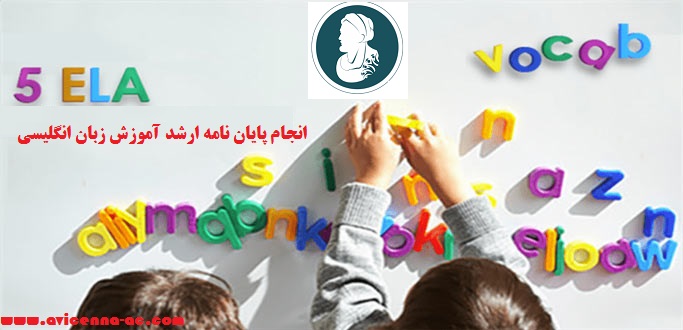
در این بخش سعی داریم به منظور آموزش انجام پایان نامه ارشد آموزش زبان انگلیسی یک نمونه فصل اول این رشته را ارائه دهیم تا دانشجویان با نحوه انجام آن آشنا شوند. موضوع این پایان نامه An Investigation into Iranian EFL Teachers’ Assessment Literacy and Inclination towards the Use of Alternative Assessment می باشد که دانشجویان رشته آموزش زبان انگلیسی می توانند با ذکر منبع از آن در انجام پایان نامه ارشد خود استفاده نمایند.
In teaching and learning, there are five basic elements which include learners, teachers, instructional materials, context, and teaching and testing (Soneville, 2007). In different educational settings, the degree and amount of interaction among these elements form certain approaches and attitudes toward teaching and learning. Soneville (2007) believes that among these elements teachers are the ones who can make a change. Wiliam (2006) believes that “the single most important variable, in the amount of progress that a student makes at school, is the quality of the teacher” (, p.3). The role of the teacher in choosing and preparing instructional materials and in assessing and testing learners’ achievement is vital.
In the last decade, assessment and testing have attracted the attention of different scholars around the world. Countries with specific educational systems that include public examinations are thinking of reengineering their approaches so that they can come to new approaches in teaching and learning and meet the changing needs of the society. In recent years, the testing and assessment of language have definitely moved from the periphery to center stage (Taylor, 2009). Language tests and the scores which they produce are of great importance in the society, they are being used in all stages of education, employment contexts, and most challenging in migration and citizenship all around the world. Shohamy (2008) also emphasizes the importance of testing by asserting that “the societal role that language tests play, the power that they hold, and their central functions in education, politics, and society all testify to the central role that language assessment practices now occupy in society”(p.xiv).
Mertler (2003) also notes that assessment is the most pivotal role of a classroom teacher. He believes that it influences almost everything that teachers do. According to Mertler (2003) some of the teachers’ jobs influenced by the assessment are:
1. decisions about large-group instruction,
2. developing individualized instructional programs,
3. determining the extent to which instructional objectives have been met,
4. providing information for administrative decisions, such as promotion and retention,
5. providing data for state or federal programs.
As Taylor (2009) believes, in many countries’ educational movements, assessment is regarded as the most important factor for improving education. By looking at the history of language teaching, we can observe a direct and close relationship between teaching and testing.
Farhady, Jafarpoor, and Birjandi, (1994) confirm this idea by saying that the interrelationship between these two concepts is so strong and close that working with any one of them without taking the other into account is impossible.
The British sociologist of education, Basil Bernstein (1990), strongly holds the view that curriculum and pedagogy will eventually be integrated by assessment. That is to say, curriculum and pedagogy are heavily based on assessment, and it is the assessment that determines the type of teaching and curriculum. Based on this quote it may be claimed that the traits that are going to be assessed, are those to be taught in the classroom. Many education scholars including O’Day and Smith (1993) believe that “what gets assessed is what gets taught and the assessment format influences the format of instruction” (p.28).
Considering such a pivotal role of assessment and considering the fact that teachers teach based on the type of assessment, it can be asserted that in order to develop learning and teaching and in order to obtain higher intellectual learning outcomes, the content and format of assessment should be changed (Smith & O’Day, 1990). These trends of thought have caused many assessment programs around the world to get revised; it has caused learning goals to be more challenging.
Along with such big changes in educational reform and taking the importance of assessment into account, there appeared a need to modify the assessment itself. In traditional assessments, language testing was identified as tests performed at a specific time for specific purposes. But these types of assessments have been criticized because of their wash-back effect. Genesee and Hamayan (1994) believe that traditional “tests can be useful for collecting information about students’ achievement under certain restricted conditions, but they are not particularly useful for collecting information about students’ attitudes, motivation, interests, and learning strategies”(p.229).
Alderson and Wall (1993) believe that two main drawbacks of high-stakes standardized tests are that in these types of tests the learners are passive in the class and no attention is paid to the learner's needs. These drawbacks caused the scholars to feel the need of putting an end to traditional assessment and think of new ways of assessment which were later termed “alternatives to assessment”.
Alternatives to assessment, as opposed to traditional assessment, are continuous and criterion-based approaches for assessing learners’ success. Proponents of alternative assessment advocate holistic assessment of students’ performance and achievement on authentic tasks that are closely related to higher-order instructional goals.
Therefore, the present study aimed at investigating Iranian EFL teachers’ assessment literacy and its’ relationship with the use of alternative forms of assessment, while taking some factors, namely degree, years of experience, and gender, into consideration.
In the last decade, authentic assessment has been accepted as a tool for having educational movements reformed; however, a new source of the problem in many educational systems has been observed to be teachers’ lack of assessment literacy (Stiggins,1991). Many scholars share the idea that most teachers are not competent in developing authentic performance assessment because of insufficient training in assessment (Hargreaves, Earl, & Schmidt, 2002; Stiggins, 1995).
Based on some studies such as Jalilzadeh and Dastgoshadeh (2011), the concept of literacy assessment has not received much attention by Iranian researchers, and accordingly, not many studies have been conducted regarding this concept.
Inbar-Lourie (2008) believes that the existence of language assessment courses shows that expertise in language assessment requires more competencies. Rogers (1991) holds the view that “an accurate assessment of achievement is being more urgently called for at the district, state, and national levels” (p. 387).
It is of great importance for the ministry of education of countries to understand the assessment literacy of their teachers which includes selecting, modifying, and implementing assessment and using it effectively in order to enhance learning. As it has been shown that an efficient assessment model can develop learning, it is critical for the ministry of education to identify teachers’ strengths and weaknesses in regard to their assessment knowledge which enables them to develop professional programs to increase assessment literacy.
Therefore, it is well informed that assessment plays a pivotal role in educational development. In the Iranian context, few studies have been conducted regarding this important issue. Having considered the aforementioned facts, the researcher is going to check the Iranian EFL teachers’ Language Assessment Literacy.
In recent projects conducted on educational reforms, assessment has played a critical role in improving learning and teaching and developing educational efficiency. Many researchers such as Plake, Impara, and Fager (1993) had extensively discussed the issue of assessment and had viewed it as a problem that will continue in the coming years (Campbell et al., 2002; Campbell & Collins, 2007; Mertler & Campbell, 2005). Therefore, researchers and experts in the field have highlighted the significance of teacher assessment literacy. They believe that some courses regarding the development of assessment literacy should be included in the teacher education programs (Brookhart, 2001; Campbell et al., 2002; Lukin et al., 2004).
Assessment is vital for a successful educational system, and it is the change in the assessment which leads to change in educational programs and curriculum design. In the same line, many experts in the field emphasize the importance of assessment and assessment literacy (Mertler, 2003; Paterno, 2001; Stiggins, 1991; Volante and Fazio, 2007). Moreover, a major problem in many educational systems has been found to be teachers’ lack of assessment literacy (Taylor, 2009). Thus, it is of utmost importance to pay attention to this factor.
Many scholars share the idea that not many teachers are competent in developing authentic performance assessment because of their insufficient training in assessment (Hargreaves, Earl, & Schmidt, 2002; Stiggins, 1995).
Therefore, this study tries to investigate the Iranian EFL teachers’ assessment literacy and to find out whether they have sufficient knowledge of assessment, and if not, certain programs can be developed in order to improve this vital knowledge.
This study set out to examine language assessment literacy (LAL) of Iranian language teachers, its relationship with an inclination toward the use of alternative assessment, and the effect of different factors on assessment literacy. To do so, this study attempts to answer the following questions:
1. Is there any significant difference between Iranian high school teachers and language institute teachers regarding their language assessment literacy?
2. Which type of alternative assessment is used more frequently by Iranian Institute teachers?
3. Which type of alternative assessment is used more frequently by Iranian high school teachers?
4. Is there any significant relationship between EFL teachers’ assessment literacy and the use of alternative forms of assessment?
5. Is there any significant relationship between the years of experience and the assessment literacy of EFL teachers?
6. Is there any significant difference between male and female EFL teachers regarding their assessment literacy?
7. Is there any significant difference between teachers holding MA and Ph.D. with teachers holding BA and lower degrees regarding their assessment literacy?
The present study has tested the following hypotheses:
1. There is no significant difference between Iranian high school and language institute teachers regarding their language assessment literacy.
2. There is no significant relationship between EFL teachers’ assessment literacy and the use of alternative forms of assessment.
3. There is no significant relationship between the years of experience and the assessment literacy of EFL teachers.
4. There is no significant difference between male and female EFL teachers regarding their assessment literacy.
5. There is no significant difference between teachers holding M.A. and Ph.D. with teachers holding B.A. and lower degrees regarding their assessment literacy.
Carrying out accurate data collection and analyses, this study managed to achieve its objectives; however, attention must be paid to some unavoidable limitations.
First, this study was conducted with a number of teachers at three provinces in Iran (Kermanshah, Hamedan, and Kurdistan); so, the sample size was limited to only three provinces. Therefore, generalizing the findings of the study to all Iranian teachers or teachers from other countries must be treated with utmost caution.
Second, in this study 200 English language teachers took the questionnaire but due to constraints in time and expense, only a small number of them were interviewed by the researcher. Consequently, caution is required when attempting to generalize the findings to all Iranian EFL teachers or to other populations with different ethnic, linguistic, or educational backgrounds.
Third, the questionnaire for assessment literacy was too lengthy and time-taking. Besides, it was in English which caused problems for teachers; possibly, some of the teachers had problems with fully understanding the questions or they may get bored by the length. Therefore, it would have been better if the questionnaire was translated into Persian.
Language Assessment Literacy: “the possession of knowledge about the basic principles of sound assessment practice, including terminology, the development and use of assessment methodologies and techniques, familiarity with standards of quality in assessment...and familiarity with an alternative to traditional measurements of learning” (Paterno, 2001, as cited in Mertler, 2003, p.9).
Alternative Assessment: “a method of finding out what a student knows or can do that is intended to show growth and inform instruction and is not a standardized or traditional test" (Shaaban, 2001,p. 2).
در صورت داشتن هرگونه سوال و یا نیاز به مشاوره در زمینه انجام پایان نامه ارشد آموزش زبان انگلیسی با آکادمی ابن سینا در تماس باشید.
از انتخاب موضوع تا دفاع؛ بهترین مرکز مشاوره پایان نامه ارشد عمران. تضمین کیفیت، ر [...]
بهترین مرجع دانلود پایان نامه، مقاله و رساله در تمامی رشتهها (فارسی و انگلی [...]
آیا به دنبال خدمات تخصصی نگارش پایان نامه دکتری هستید؟ آکادمی ابن سینا با بهره&zw [...]
آخرین اخبار دانشگاه آزاد در ادامه خدمتتان ارائه شده است. آخرین اخبار دانشگاه آزاد [...]

حضرت آیت الله خامنه ای رهبر کبیر انقلاب به شهادت رسید [...]

برگزاری تکمیل ظرفیت آزمون استخدامی آموزش و پرورش 1403؛ به زودی [...]

همراه ما باشید با آخرین اخبار پژوهشی کشور در بهمن ماه 1402. [...]